Cart
0
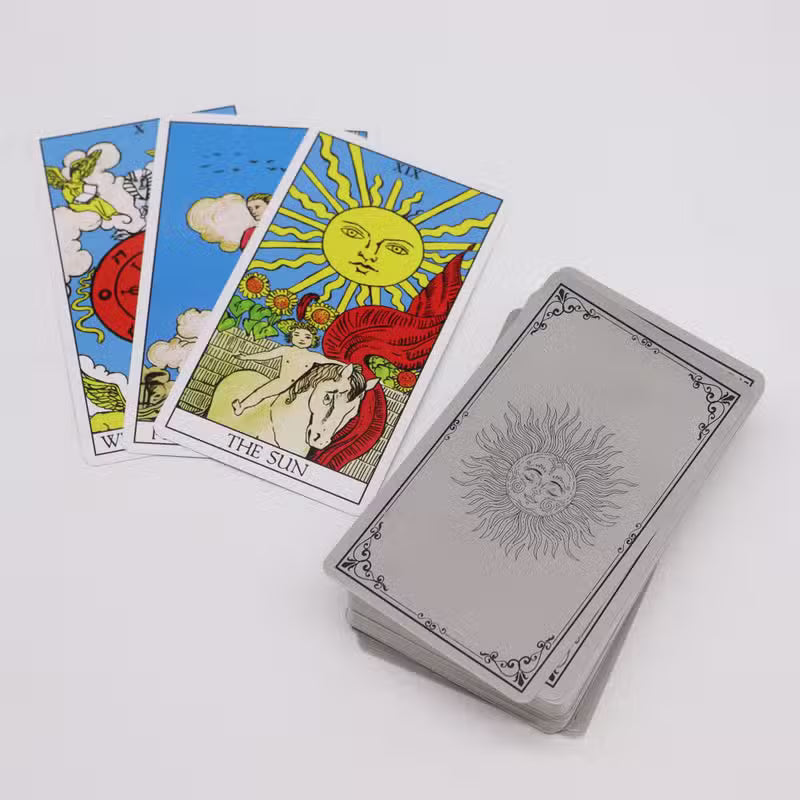
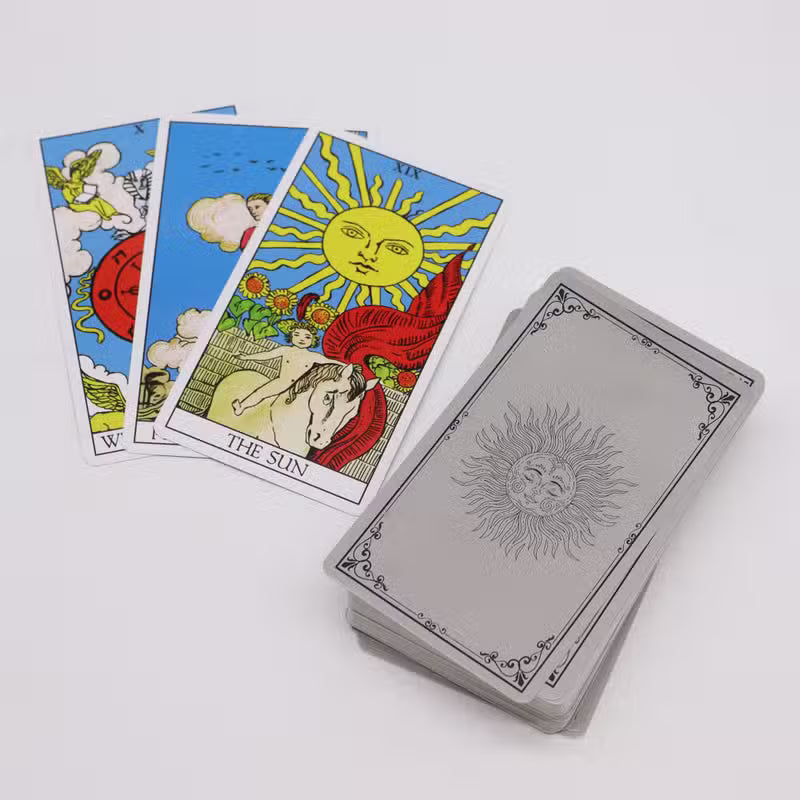
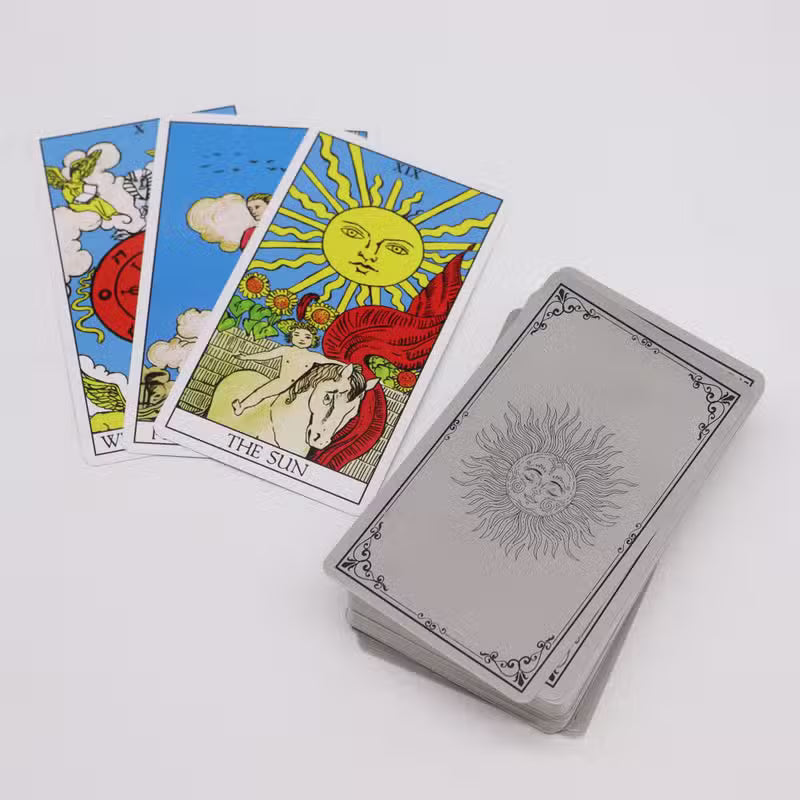
A standard tarot deck has 78 cards: 22 Major Arcana and 56 Minor Arcana. The Minor Arcana contain four suits of 14 cards each: ten numbered cards and four court cards. Learning that structure gives you a way to organise the deck before you try to remember individual meanings.
This guide uses Rider–Waite–Smith names and artwork. Some editions rename suits or court cards, change numbering or add extra cards. If your deck differs, use its contents list and guidebook to map the groups.
How the 78 tarot cards fit together
78 cards = 22 Major Arcana + 56 Minor Arcana
Major Arcana · 22
The Fool and 21 other named cards, such as The Magician, Strength and The World.
Minor Arcana · 56
Wands, Cups, Swords and Pentacles. Each suit has 14 cards.
14 = Ace–Ten + Page, Knight, Queen, King
For a first sorting exercise, keep the two groups separate. Then divide the Minor Arcana by suit. You will have five piles: one Major Arcana pile and four suit piles. Check your own edition before assuming a missing familiar title means a card is absent.
What is the difference between Major and Minor Arcana?
The Major Arcana are a series of individually named cards. Readers often use them to explore broad themes, such as beginnings, choices or transitions. The Minor Arcana organise pictures and themes through recurring suits and ranks, which can make them useful for discussing everyday activities, relationships and decisions. These are interpretive starting points, rather than rules about how significant an event must be.
| Feature | Major Arcana | Minor Arcana |
|---|---|---|
| Count | 22 | 56 |
| Organisation | Named cards, usually numbered 0–21 | Four suits of 14 cards |
| Example | The Hermit | Three of Pentacles |
| First study question | What theme does this scene invite me to consider? | How do the suit, rank and pictured activity work together? |


Try giving both cards the same question: “What could help me approach a group project?” The Hermit could prompt time to prepare your own thoughts. Three of Pentacles could prompt a conversation about skills and responsibilities. The question and position shape the reading; the group alone does not determine the answer.
See a complete worked spread with Major and Minor Arcana together.
What are the four tarot suits?
In Rider–Waite–Smith-style decks, the suits are Wands, Cups, Swords and Pentacles. Use the themes below as a first organising aid, then look closely at the individual scene. A card’s picture may complicate the general theme of its suit.
| Suit | Starting themes | Question to practise | Study the cards |
|---|---|---|---|
| Wands | Initiative, motivation and creative energy | Where am I putting my energy? | 14 Wands cards |
| Cups | Feelings, connection and relationships | What am I noticing about connection? | 14 Cups cards |
| Swords | Thought, communication and conflict | What needs clearer thinking or wording? | 14 Swords cards |
| Pentacles | Resources, practical work and material life | What practical support or effort is needed? | 14 Pentacles cards |
Compare Three of Cups with Three of Pentacles to see how a repeated number appears in different settings. In the first, figures raise cups together; in the second, people gather around skilled work. Shared activity connects the scenes, while the suit and picture change the kind of activity you might discuss.
Which tarot cards are court cards?
The four courts in each Rider–Waite–Smith suit are Page, Knight, Queen and King. Across four suits, that makes 16 court cards. They belong to the Minor Arcana.
When you start, describe the figure’s posture, what they are holding and how they relate to the suit symbol. You might explore a court card as a way of approaching a task or relating to a situation. You do not need to assign it to a particular person, gender or age. Different reading traditions use different approaches, so compare the possibilities with your guidebook.
For example, a Page can offer a prompt about learning or curiosity in many contemporary readings. Ask what you could explore or practise in the card’s suit. Keep that as one possible reading rather than a definition that fits every question.
A ten-minute deck sorting exercise
- Find the named Major Arcana. Put them in one pile. In a standard deck, expect 22.
- Separate the four suits. Use the symbols and names on your own cards. Expect 14 in each standard suit.
- Lay out one suit in order. Start with Ace, continue to Ten, then place Page, Knight, Queen and King.
- Pick three examples. Choose a Major Arcana card, a numbered card and a court card. Write the name and group of each.
- Check unfamiliar labels. Use the guidebook to map renamed cards or extras before recounting.
If you are using our online library, open each group using its navigation links and pick your examples there. You can complete the identification exercise without buying a deck.
Check your understanding
Try answering each question before opening the answer. These checks work without an account.
Is Queen of Cups a Major or Minor Arcana card?
Minor Arcana. Queen is a court rank, and Cups is one of the four suits.
How many court cards are in a standard 78-card tarot deck?
Sixteen: four ranks in each of four suits.
Where does The Fool belong?
In the Major Arcana. In the Rider–Waite–Smith sequence, it is numbered 0.
Why does each Minor Arcana suit contain 14 cards?
There are ten numbered cards, counting Ace through Ten, plus four court cards.
Frequently asked questions about tarot deck structure
Do all tarot decks have exactly 78 cards?
Seventy-eight is the standard count. Some editions include bonus cards, replace familiar names or adapt the structure. Check the specific deck’s contents and instructions.
Are Major Arcana cards more important than Minor Arcana cards?
Read them in the context of the question and spread position. Broad themes can appear in the Major Arcana, while a Minor Arcana card can still be central to the reflection you are exploring.
Are Ace and One the same rank?
Ace is the first numbered rank in the structure used here. Your deck may label or discuss it differently, so use its own guidebook when comparing editions.
Why do some cards say Coins instead of Pentacles?
Suit names vary across traditions and editions. Coins often occupies the place called Pentacles in Rider–Waite–Smith-style decks. Check the deck’s own explanation rather than relying on the title alone.
Do oracle cards use this structure?
Oracle decks follow their creator’s structure and may have different counts, categories or prompts. See our tarot and oracle comparison before applying tarot groupings to an oracle deck.
What should I learn after the deck structure?
Practise describing one picture and connecting it to a question. Use the seven-day beginner learning plan to move from recognising groups to a simple reading.
Your next lesson
Open the illustrated 78-card library and choose one card to study. Then try the one-card reading lesson. If you are choosing physical cards, check sample scenes and guidebook content using our first-deck guide.
References and image credits
For the historical deck structure and illustrated tradition, see A. E. Waite, The Pictorial Key to the Tarot (first published 1910), illustrated by Pamela Colman Smith. Card images shown here are historical Rider–Waite–Smith illustrations via Wikimedia Commons. The sorting exercise, comparison example and study questions are Arts & More’s original teaching material. Suit themes are introductory interpretations and can vary by context and tradition.


 https://artsandmore.co.uk