Cart
0
For your first tarot reading, ask one open question, draw one card and describe what you see. Compare your observation with the card’s usual meaning, then write one small action you could take. A deck and a flat surface are enough to begin.

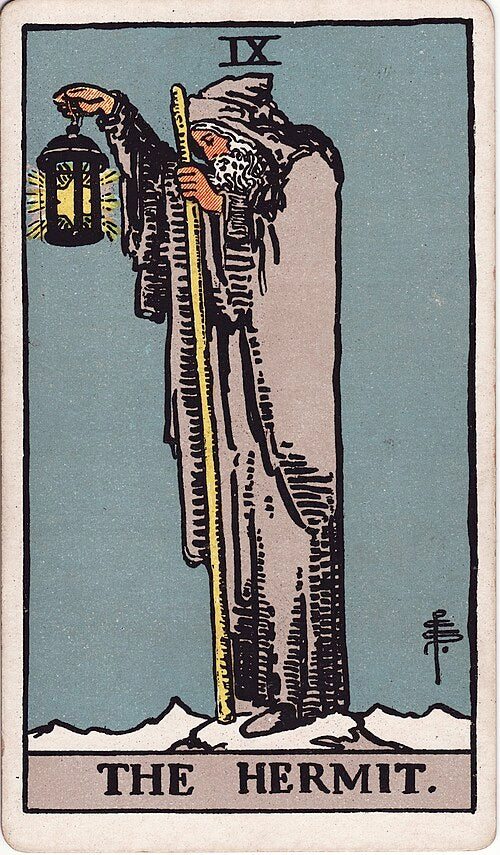
Notice how far the lantern lights the path. What can you see clearly enough to act on today?
What do you need for a first tarot reading?
Use one deck and its booklet, or keep the illustrated guide open alongside you. Have paper or a notes app ready. A cloth can give the cards a clean surface and a box can help with storage after the reading.
How to read one tarot card in five steps
- Ask an open question. Try ‘What can help me prepare for tomorrow’s conversation?’
- Shuffle and draw one card. Draw from the top or from a fan. Pick a method you can repeat.
- Describe the picture. Write down a person or object, an action and one other detail that draws your eye.
- Check one interpretation. Look up the card. Ask how its theme relates to your question.
- Write one next step. Choose an action small enough to try today.
A worked reading with The Hermit
Question: What can help me prepare for tomorrow’s conversation?
What I see: A figure stands alone with a staff and holds up a lantern. The lantern illuminates the immediate area.
One interpretation: I could set aside quiet time to identify the one point I want to make clearly.
Next step: Spend ten minutes writing down my main point and one question I want to ask.
Practise with two more illustrations

For ‘What would help me reset today?’, notice the resting figure. Try choosing one thing to pause for ten minutes.

For ‘What needs my attention first?’, look at how the figure handles both pentacles. Decide which of your two priorities needs action today.
Try a draw and write your own answer
Write the question, the card name, two details you noticed and one action. If the card feels unclear, describe the scene again and pick a detail you missed the first time.
Try a one-card reading · Browse the illustrated card library
Do you need to use reversed cards?
You can start with upright meanings. Once you’re comfortable describing pictures and connecting them to your question, try the lesson on reversed cards.
Turn a vague question into a useful prompt
Give the card one job. Name the situation and ask what you can notice, prepare or try. A narrower question gives you a way to test your interpretation against your day.
- For a decision: ‘What should I check before choosing between these two options?’
- For a conversation: ‘How can I make my main point clearer?’
- For a new habit: ‘What would make the first step easier to repeat?’
Read the same picture in two different situations
The figure in the Two of Pentacles is holding two coins joined by a loop. That detail stays the same. The question tells you what to do with it.
- Preparing for a busy afternoon: if you are switching between two tasks, try finishing one small piece before you switch again.
- Planning a new weekly routine: if two commitments both matter, give them different times so you can see whether they fit together.
Use the picture as evidence for your interpretation. In either example, you can point to the loop and the two coins to explain where the idea came from.
Keep a three-line reading journal
- Question and card: What would help me reset this afternoon? Four of Swords.
- Detail and interpretation: The figure is resting. I could give myself a short pause before starting another task.
- Action and review: I took ten minutes away from my screen. Afterwards, I could decide what to finish first.
Review a few entries together. Look for which details you tend to notice first and whether the actions you chose were practical.
Frequently asked questions about your first tarot reading
Can I read tarot for myself as a beginner?
Yes. Start with one card and one question about something you can do. Record what you saw and the step you chose so you can revisit it later.
Do I have to memorise all 78 cards before I start?
You can look up each card as you draw it. Describe the artwork first, then compare your impression with the booklet or the illustrated card library.
How should I shuffle and choose a card?
Use a shuffle that is comfortable for the size of your deck. You can draw from the top or spread the deck and choose a card from the fan. Pick the method before you begin.
Can I practise if I do not own a deck yet?
Yes. The online practice desk lets you draw a card, reveal its meaning and write down an observation.
What if I draw the same card twice?
Compare your question and the detail you noticed each time. The same image can suggest different actions when the situation changes.
How long should my first reading take?
Try five to ten minutes. Give yourself time to ask the question, study the picture and write one action you can try.
When should I move on to three cards?
Try a three-card spread once you can connect one visual detail to your question. Give each card a different job so you can join the observations into a single reading.
Illustrations by Pamela Colman Smith, Rider–Waite–Smith deck. Artwork source.
Practise one card before adding more
How do I know when a one-card reading is finished?
Stop when you have named one visual detail, related it to your question and written down one small action. You can reread your note later to see which part was useful.
What if the image makes no immediate sense?
Describe it in plain language first: a person, an object, a direction or a colour. Read the guidebook after that and compare its suggestion with your observation.
Can I read the same card again tomorrow?
Yes. Keep the question or situation in view. The same illustration can prompt a different observation when your circumstances change. Note the date and what caught your attention each time.


 https://artsandmore.co.uk/