Cart
0
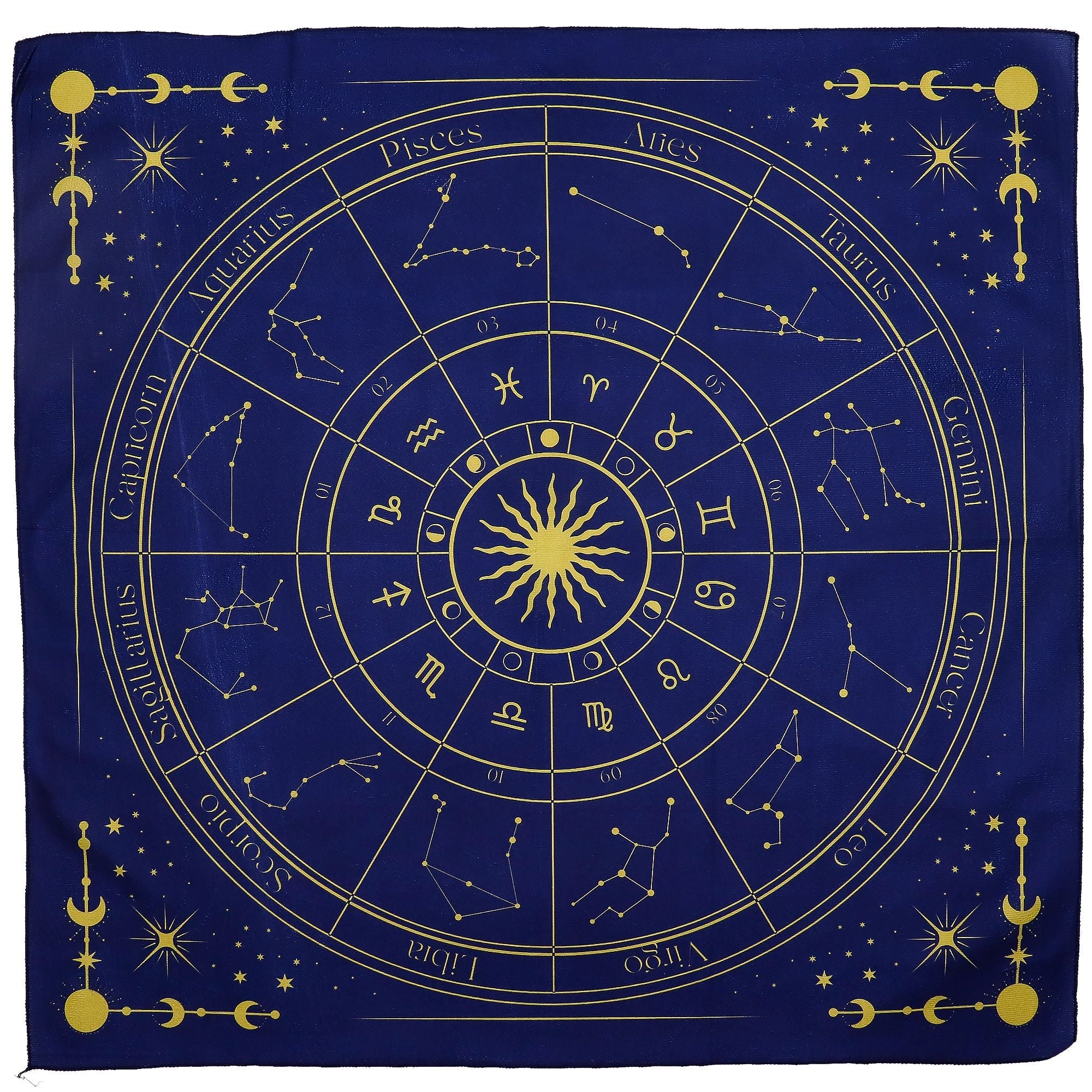
Choose a tarot reading cloth by measuring two things: the clear area of your table and the space your usual card spread occupies. The cloth should fit the table and leave enough room to turn and lift the cards. A 75 × 75 cm cloth needs at least 75 cm of clear width and depth to lie fully flat.
Reading cloth or altar cloth: what is the difference?
A tarot reading cloth gives you a surface for laying out and handling cards. An altar cloth covers a surface where you arrange objects for display or personal practice. One cloth can serve both purposes if it fits the space and the cards sit flat.
- For readings
- Prioritise clear space for the spread, a flat surface and a print that lets you see the card edges.
- For an altar or display
- Measure the surface, decide whether you want the cloth to drape, and plan where the objects will sit so you can reach them easily.

Example: On a shelf with 55 cm of clear depth, a 75 cm cloth has 20 cm of excess depth. A drape may suit a display, while a reading needs a clear, supported area where you can lift each card. If you fold the cloth, keep the fold outside the spread.
Can the same cloth be used for both?
Yes. Clear enough space for your spread when you switch to reading, then check that the cloth lies flat where you’ll deal the cards.
1. Measure the reading space before choosing a cloth
- Clear a space and measure its width and depth where the cloth will sit.
- Lay out your usual spread with the cards oriented as you normally use them. Keep sleeves on if you read with them.
- Leave enough space at the edges to pick up a card without shifting its neighbours. Set out a notebook or guidebook if you normally keep one beside the spread.
- Check both dimensions of the cloth against the clear surface. A table can be wide enough and still be too shallow.
What if your table is smaller than the cloth?
On a desk with 80 cm of clear width and 55 cm of clear depth, a 75 cm square cloth fits across the width but extends 20 cm beyond the available depth. If you try folding the extra fabric underneath, check that the fold sits outside the spread and that the cards stay flat. If the fold runs through the layout, choose a smaller cloth or use the bare desk.
2. How much room does a three-card spread need?
For three upright 7 × 12 cm cards in a row, allow 31 × 18 cm if you leave 2 cm between cards and 3 cm around the layout. Measure your own cards, including sleeves, to adapt the example.
A three-card spread in one row
1
2
3
For three upright cards of equal size, use 3 × card width + 2 × gap for the row width. The depth is the length of one card. For illustration, three 7 × 12 cm cards with 2 cm gaps occupy 25 × 12 cm before margins. Adding 3 cm around all sides gives a working area of 31 × 18 cm. These are example dimensions; measure your own deck.
A spread with sideways cards or multiple rows
If you turn one of those example cards sideways, it takes up 12 cm of row width instead of 7 cm. The row becomes 30 cm wide before margins. Rotating a card by 180 degrees for a reversal keeps the same footprint. For layouts with multiple rows, set out every card, then measure between the outermost edges in both directions. Leave space for any additional card you regularly draw.
Use a vertical column on a narrow surface
If you have more depth than width, the same three upright cards can sit in a column. With 2 cm gaps and 3 cm margins, allow 13 × 46 cm: 7 + 6 cm across and (3 × 12) + (2 × 2) + 6 cm deep. Keep the guidebook and remaining deck outside that footprint.
3. Match the cloth to how you read
- One card and a notebook. Set the notebook next to the card and check where your writing hand rests. Both can sit on the cloth, or the notebook can stay on the table to keep the reading area small.
- Three cards on a narrow desk. Check the full width with gaps before buying. A large square cloth may overhang even when the cards themselves fit easily.
- A larger spread on a dining table. Lay out the widest spread you use and check that you can reach the farthest card. Reserve a place for the remaining deck if you like to keep it within reach.
- A setup you pack away. Check how the fabric folds, then try dealing cards across a fold. Choose a spot where the cards sit flat and can be lifted easily.
4. Compare the Zodiac and Tree of Life cloths
| Cloth | Size and material | How to choose |
|---|---|---|
| Zodiac | 75 × 75 cm, polyester | Choose the circular zodiac wheel if you like a visible centre around which to arrange cards. |
| Tree of Life | 75 × 75 cm, polyester | Choose the central tree motif if you prefer that design. Check where the branches sit around your usual spread. |
Both cloths have the same footprint. Look at the product photos alongside your deck and think about how well you’ll see card edges against the print. If you’re buying for someone else, ask how much space they normally have to read.
Frequently asked questions
Do you need a tarot cloth for a first reading?
A clear, flat table is enough. A cloth gives you a defined area that you can set out and put away. If you’re assembling your first setup, see what comes in a tarot starter kit.
Will a 75 × 75 cm cloth fit a three-card spread?
It fits the 31 × 18 cm example above with room to spare, provided your table supports the cloth as you intend to use it. Measure your cards, margins and table to check your own setup.
Can you use a reading cloth for oracle cards?
Yes. Use the same measuring method. If your oracle cards are wider, measure them directly and recalculate the row width before choosing the cloth.
For more help with your setup, browse the Tarot Guidebook Hub.
Check the cloth with a trial layout
How do I test a pattern before buying a cloth?
Look at a product photo with several cards in mind. A busy central print may compete with the cards, especially when their borders are narrow. Lay your cards on a similarly patterned surface to see which edges are easy to distinguish.
Where should I place the guidebook during a reading?
Place it to one side or behind the spread, wherever you can open it without shifting cards. Include that space in your table measurement if you usually keep the guidebook open.
What should I check before washing a reading cloth?
Read the care instructions for its material and print. If the product page omits them, ask for the label rather than assuming the same wash method applies to every cloth.


 https://artsandmore.co.uk/